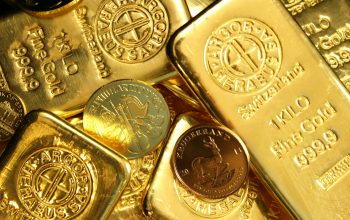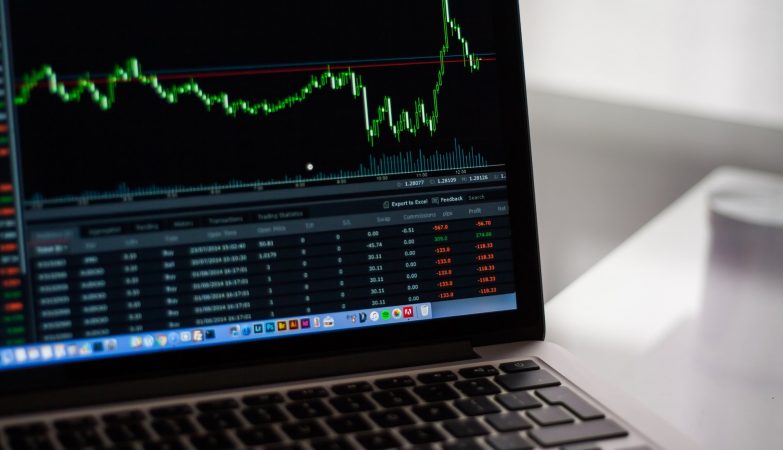
Panic selling on a gold dip is usually a rookie mistake. Anyone paying attention to the broader market dynamics knows exactly what we’re looking at right now. Every face-ripping rally eventually needs to take a breather, and that’s exactly what this current correction is—a rare window for strategic capital to get positioned.
We are stepping into a radically different financial era characterized by runaway debt, sticky inflation, and monetary instability. Precious metals are aggressively clawing back their relevance. The widely respected In Gold We Trust report is already floating $8,900 as a realistic long-term target, suggesting this bull market is barely out of the first inning. But if you want to know how to actually monetize this uncertainty right now, you need to look at players executing entirely different playbooks. Barrick Mining, Desert Gold, and Agnico Eagle are currently flashing serious buy signals.
The Macro Tailwind: UBS is Pounding the Table
If you think the run is over, UBS strongly disagrees. The bank’s top precious metals strategist, Joni Teves, recently doubled down on some staggering year-end targets: $5,600 an ounce for gold and $100 for silver.
Sure, geopolitical noise like the Iran conflict has put some short-term pressure on prices. But look under the hood. Inflation is keeping real interest rates suppressed while the Fed basically sits on its hands. That is textbook rocket fuel for zero-yield assets. Add in the fact that global central banks are absolutely hoarding gold to diversify away from fiat, and it becomes obvious that the floor on this market is rock solid. UBS isn’t looking at the recent consolidation as a red flag at all. They see it as a mechanical reloading phase for smart money.
Barrick Mining: The Blue-Chip Cash Machine
Let’s look at the heavyweights. Barrick Mining’s latest quarterly numbers show a company operating in its own league. They blew past their own production guidance, pulling 719,000 ounces of gold out of the ground while simultaneously driving their all-in sustaining costs down 4% to $1,708 an ounce. When you’re selling into an average realized gold price of roughly $4,800, you are generating the kind of massive, unadulterated cash flow that smaller competitors literally dream about.
Yeah, their mega-projects in Pakistan are on ice for the moment, but their North American operations are printing money. The balance sheet is a fortress with $2.4 billion in liquidity, and management isn’t just sitting on that cash. They are unleashing a $3 billion buyback program designed to rip about 4% of outstanding shares straight off the open market, stacked on top of a $0.175 quarterly dividend. If gold holds its ground here, don’t be shocked to see a special dividend hit your brokerage account by year-end.
But the real catalyst is the planned spin-off and IPO of their North American crown jewels—specifically Nevada Gold Mines, Pueblo Viejo, and the wildly high-grade Fourmile project. Pure-play US producers command a massive premium on Wall Street compared to global miners saddled with emerging market jurisdictional risks. The market hasn’t fully priced in the value unlock of this secondary listing yet. At $39.50 a share, the window to front-run that institutional repricing is wide open.
Desert Gold: The Leap to Producer
On the completely opposite end of the risk curve, you have Desert Gold. For years, this was just another West African exploration story burning cash. That phase is dead. They are actively pivoting to become a cash-flowing producer, and that changes the math on the stock entirely.
The gravity circuit for their Barani East zone in Mali has already passed technical inspections. Six shipping containers of gear are literally on a boat to Dakar right now, slated to arrive by late June and spin up by mid-July. That entirely derisks the equipment side of the equation. Site clearing, foundation work, and water drilling are already happening. Unlike a hundred other junior miners pitching vague geology, Desert Gold actually has a fully funded, concrete roadmap to first production.
The valuation disconnect here is absurd. Even using conservative models, their recent technical study slaps a net present value of over $120 million on the oxide project at today’s gold prices. The entire company is currently trading at less than half of that. Throw in the fact that they share a fence line with heavyweights like Barrick and B2Gold, plus Zijin’s recent buyout of Allied Gold in the same neighborhood, and the strategic premium of this real estate is impossible to ignore. Smart money already saw this coming, heavily oversubscribing a private placement back in February.
At 0.13 CAD, you aren’t gambling on random drill results anymore. You are buying the transition from a capital-hungry explorer to a self-funding producer. Once they check off the final milestones—confirming water supply, firing up the Mali plant, and dropping assays from their current 4,250-meter drill program at SMSZ—the market perception will shift violently.
The Coming Silver Squeeze
If you are bullish on gold, you can’t ignore silver. UBS expects the white metal to essentially ride shotgun with gold, but with its own explosive supply-demand fundamentals. We are looking at a structural supply deficit this year. Demand is vastly outstripping what’s coming out of the ground, driven heavily by relentless accumulation from China, India, and the Middle East.
There are short-term risks, obviously. Volatility is just the price of admission in this sector. Because silver operates as an industrial metal on top of being a monetary asset, a severe global economic slowdown could kneecap industrial demand and throttle its upside compared to gold. It doesn’t quite have the pure safe-haven immunity that gold enjoys. But structural deficits don’t lie. The broader macroeconomic forces are aggressively lined up, and that $100 target for silver isn’t just a fantasy—it’s the math catching up to reality.